Cordless Tire Inflator for an EV: The Thermos-Sized Tool That Can Save a Winter Morning
EV tire pressure drops in cold weather and quietly cuts range. What a cordless tire inflator like the Bayu portable air compressor for car tires can do, based on official specs, plus a quick FAQ.

Affiliate link article. If you buy through the Tesery links in this article, I may earn a commission at no extra cost to you. We have not tested this inflator; every number below comes from the official product page.
See the Bayu inflator on Tesery →
A cordless tire inflator is one of the cheapest upgrades an EV driver can keep in the trunk. When temperatures drop, EV tire pressure falls overnight, the TPMS light comes on, and a heavy electric car starts losing grip and range. Instead of hunting for a gas station air machine that actually works, a portable air compressor for your car fixes those missing PSI in a few minutes.
Why EV tire pressure matters
The NHTSA calls proper tire pressure "the most important part of maintaining your tires" and recommends checking it at least once a month when tires are cold, meaning the car has not been driven for at least three hours. The correct PSI is on the Tire and Loading Information label on the driver's door jamb or in the owner's manual, not the number printed on the tire.
NHTSA also notes that only 19% of consumers properly inflate their tires, and that TPMS only warns you when a tire is significantly underinflated. By the time the light is on, you have already been driving low.
Cold weather, tire pressure and EV range
According to FuelEconomy.gov, run by the U.S. Department of Energy and the EPA, EV range can drop by about 41% at 20°F in mixed driving with the cabin heater on. Most of that is heating, but the same source lists lower tire pressure in cold temperatures, which increases rolling resistance, as one of the causes. It is one of the few winter losses you can fix yourself.
Bayu cordless tire inflator: official specs
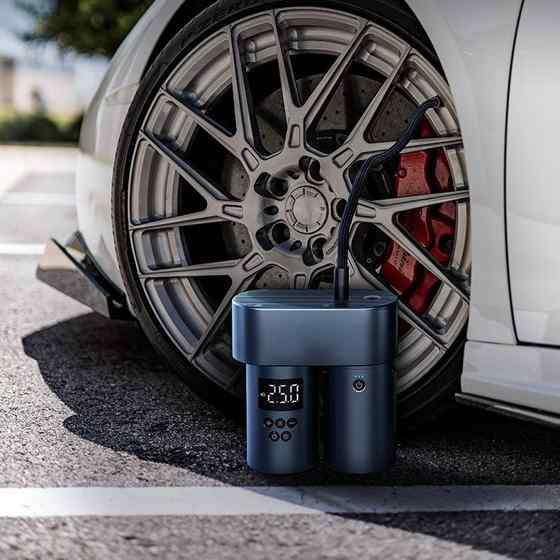
Per Tesery's product page:
- Air output: 38 L/min.
- Inflates car tires up to 75 PSI and bicycle tires up to 150 PSI.
- Inflates most car tires from 0 to 36 PSI in 3–8 minutes.
- A 255/50R20 tire goes from 29 to 36 PSI in about 60 seconds.
- Auto shut-off at the preset pressure.
- One charge fills roughly 5–8 tires (0–36 PSI), with up to 40 minutes of run time.
- Four modes (car, bike, motorcycle, ball) and an LED light for night use.
- Optional 5 m (about 16 ft) cord to run it from the car when its battery is empty.
Price shown on the page: $89.99 USD, regular price $99.99 USD (at the time of writing).
What it means for drivers
A portable tire inflator does not replace a tire shop. If a tire keeps losing air, it needs a repair. What it does is save you the trip to a broken or busy air machine just to top up a few PSI lost overnight. For EVs, which weigh more than comparable gas cars, correct tire pressure matters for tire wear as much as for range.
Driving a Tesla? Read my separate guide on Tesla tire pressure and Tesla TPMS sensor replacement.
FAQ
What PSI should EV tires be? Whatever the Tire and Loading Information label on your driver's door jamb says, measured cold. Never inflate to the maximum PSI molded on the tire sidewall.
Does cold weather lower tire pressure? Yes. NHTSA and FuelEconomy.gov both note that tire pressure drops in cold temperatures; NHTSA says the TPMS light may come on on cold mornings and turn off once the tires warm up.
Can a cordless inflator fill car tires? According to Tesery, the Bayu inflates most car tires from 0 to 36 PSI in 3–8 minutes and stops automatically at the set pressure.
How often should I check tire pressure? NHTSA recommends at least once a month, including the spare if you have one.


