Regenerative braking and one-pedal driving: how to gain range in the city
A practical guide for drivers in Romania: the regen levels offered by Tesla, BMW, Hyundai, Kia, Volkswagen and Renault, when to use each mode, what changes in winter and how to gain range in town.

One of the great advantages of an electric car is that it can recover energy every time it slows down. When you lift off the accelerator, the motor becomes a generator, slows the car and sends energy back to the battery. In town, with traffic lights and congestion, that means extra kilometres and brake pads that last far longer. Here is how to get the most out of regenerative braking.
What regen levels exist
- Tesla uses strong regen designed for one-pedal driving. Under Controls > Dynamics > Stopping Mode you choose Creep, Roll or Hold. Hold keeps recovering energy down to very low speeds and brings the car to a full stop without the brake pedal.
- BMW (i4, iX, iX3) offers Adaptive, High, Medium and Low in position D, set in iDrive. Adaptive uses navigation and sensors to match braking to traffic. Position B on the selector means maximum regen and a "one-pedal feeling".
- Hyundai and Kia have steering-wheel paddles: left increases, right decreases, from level 0 to 3. At level 3, one more pull on the left paddle activates i-PEDAL, which stops the car using the accelerator alone. Holding the right paddle for over a second turns on automatic regen, shown as "AUTO".
- Volkswagen ID. models prioritise coasting in D: the car glides when you lift off, and when you brake, the motor recovers most of the energy on its own. In B, regen is stronger, without stopping the car completely.
- Renault 5, 4, Mégane and Scenic E-Tech use paddles with several levels, from free-wheeling up to the One Pedal function, depending on the version.
When to use each mode
In town, the maximum level or one-pedal is the best choice: you slow down just by easing off the accelerator, and every traffic light gives you energy back. On open roads and motorways, a low level or adaptive mode lets the car coast, which is more efficient than braking and accelerating again. On long descents, such as the Olt Valley or the Transfăgărășan, strong regen keeps your speed in check and tops up the battery.
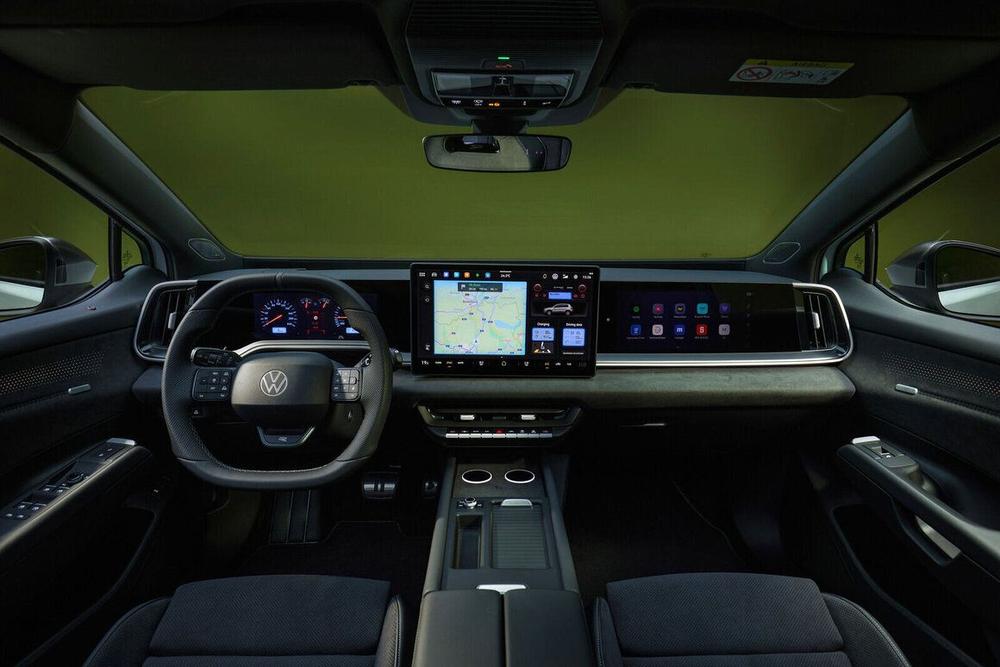 Photo: Volkswagen
Regen is weaker in winter
A cold battery cannot accept as much energy, so on a frosty morning the car will slow down less when you lift off. The same happens with a battery charged to 100%. Tesla offers Apply Brakes When Regenerative Braking Is Limited, which uses the friction brakes to keep deceleration consistent. On slippery roads, Renault and Hyundai recommend low regen levels and using the brake pedal.
Practical tips
- Anticipate: lift off early instead of braking hard.
- Precondition the battery in the app before you leave, so regen comes back sooner.
- Use the brakes now and then so the discs don't rust. More in our EV servicing guide.
- On long trips, combine coasting with well-planned stops, as in our long-distance driving guide.
With a little practice, one-pedal driving becomes natural and relaxing, and your city range improves noticeably.


